For queries, return and refund requests, we aim to respond to all emails within 1-3 days. Please reach out to us directly at contact@needohshop.au
How to Clean a NeeDoh: Keep Your Sensory Toy Fresh and Stretchy
How to Clean a NeeDoh: Keep Your Sensory Toy Fresh and Stretchy
A NeeDoh can pick up fingerprints, dust and a surprising amount of desk grime after a few satisfying squishes. The good news? You usually don’t need anything fancy to freshen it up.
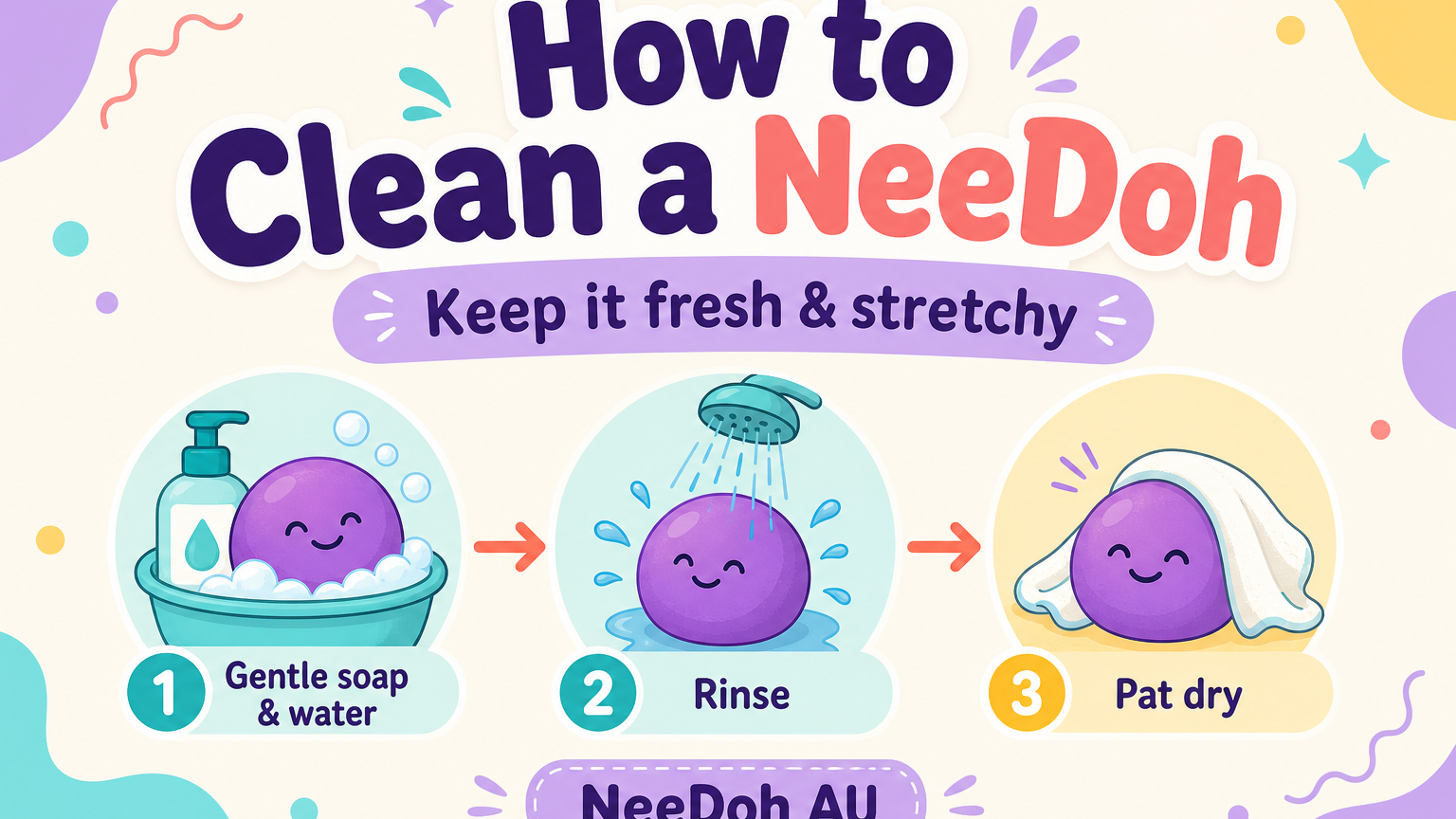
Clean a NeeDoh with mild soap and cool or lukewarm water, then let it air-dry completely. Use a soft touch, avoid harsh products and keep it away from heat. But how do you clean the surface without making the shell cloudy, sticky or damaged?

A gentle clean is the safest way to keep your NeeDoh feeling smooth and ready to squish.
The safest way to clean a NeeDoh
For most smooth-shell NeeDoh products, hand-washing is the sensible starting point. Take your time rather than scrubbing hard: the flexible outer shell is designed for repeated squeezing, but sharp nails, abrasive materials and excessive force can still cause damage.
- Check the packaging first. NeeDoh models can have different finishes and textures, so follow any care instructions supplied with your particular product.
- Prepare cool or lukewarm water. Hot water isn’t needed and may affect the outer shell.
- Add a small amount of mild soap. A gentle, non-abrasive soap is preferable to strong cleaning products.
- Wash gently by hand. Use your fingers or a soft, clean cloth to lift away dirt and residue.
- Rinse thoroughly. Soap left on the surface can make the NeeDoh feel slippery or tacky.
- Pat it dry. Use a soft towel, without twisting, pulling or squeezing aggressively.
- Leave it to air-dry fully. Keep it on a clean, dry surface before returning it to a bag, toy box or desk.
Don’t put it away while it’s still damp. Trapped moisture can make the surface feel unpleasant, and a damp toy will quickly collect more lint and dust.
What you’ll need before you start
Keep the cleaning setup wonderfully simple. Most of the time, you’ll need:
- Cool or lukewarm water
- A small amount of mild soap
- A soft cloth or clean hands
- A clean, dry towel
- A dry, well-ventilated place for air-drying
There is no reason to reach for a scourer, stiff brush or nail brush. Those tools can scratch or stress the surface, especially if you press hard around seams or corners.
Before washing, remove rings and check your fingernails. A NeeDoh’s shell may feel tough during normal play, but it isn’t indestructible. Steady pressure is kinder than poking, pinching or digging in with a nail.
Hand-wash or wipe? Match the method to the finish
Not every NeeDoh feels exactly the same. A smooth Nice Cube, a textured Ripples and a glittery or translucent style may respond differently to cleaning. If the packaging recommends a soft, slightly damp cloth rather than full hand-washing, use that method.
| Needoh surface | Gentlest approach | Extra care |
|---|---|---|
| Smooth shell | Wash gently with mild soap and cool or lukewarm water, then rinse. | Don’t scrub or wring it. Dry completely before use. |
| Textured or ridged shell | Use a soft, damp cloth or careful hand-washing to reach the grooves. | Take extra time rinsing around the texture so soap doesn’t remain in the ridges. |
| Clear, translucent or glitter finish | Start with a slightly damp, soft cloth unless the packaging says hand-washing is suitable. | Avoid experimenting with oils, abrasive cleaners or heat to change its appearance. |
| Sticky or visibly dirty surface | Repeat a gentle soap-and-water clean rather than using stronger chemicals. | If the shell is cracked, punctured or leaking, stop using it. |
Some care guidance mentions a tiny amount of cornstarch or baby powder to restore smoothness on certain opaque models after washing. Treat that as optional, not a universal step: avoid it on finishes where powder could cloud the surface, and check the product packaging first.
How to clean a sticky NeeDoh without making it worse
A sticky feeling can come from grime, soap residue or the surface simply needing a proper rinse. Start with the least aggressive solution: mild soap, water and gentle handling.
Wash the NeeDoh once, rinse it carefully and let it air-dry. If it still feels tacky, don’t immediately add oil, alcohol or a household cleaner. Those products may alter the feel of the shell, leave a residue or make the surface harder to handle.
Cuticle oil and similar online hacks might appear tempting when a clear or translucent NeeDoh looks cloudy, but they aren’t a reliable general cleaning method. Oil can leave the outside slick and attract dust. It can also make it harder to tell whether the shell itself has changed.
And if the stickiness comes with a split, puncture, leak or unusual change in the shell, cleaning won’t repair it. Keep the product away from children and pets and dispose of it appropriately rather than trying to patch or refill it.
What not to use on your NeeDoh
Cleaning a sensory toy isn’t the moment for a cupboard full of chemicals. Avoid the following:
- Hand sanitiser or alcohol-based products: these can be harsh on flexible surfaces and may leave the NeeDoh feeling dry, tacky or slippery.
- Bleach, disinfectant and strong household cleaners: they aren’t needed for ordinary dirt and may damage the outer shell.
- Abrasive sponges and brushes: rough fibres can mark or weaken the surface.
- Hot water, hairdryers and direct heat: heat may affect the shell or filling.
- Microwaves and freezers: don’t heat, freeze or attempt to alter the NeeDoh this way.
- Washing machines and dryers: tumbling, pressure and heat are too rough for a squishy toy.
- Sharp tools and fingernails: never scrape off a mark or test the shell with a point.
- Teeth: NeeDoh is non-toxic, but it isn’t food and should never be bitten or ingested.
Think gentle, cool, clean and slow. That combination protects the tactile experience far better than trying to force a quick result.
How to keep your NeeDoh cleaner for longer
Cleaning works best when it isn’t doing all the work. A few small habits can reduce the amount of dirt your NeeDoh collects between washes.
- Wash and dry your hands before using it, especially after eating or using lotion.
- Keep it off rough concrete, gritty outdoor surfaces and dusty floors.
- Store it in a clean container or drawer instead of loose in a school bag or handbag.
- Keep it away from pens, keys, scissors and other sharp objects.
- Don’t share it during messy activities or let it come into contact with food.
- Give it a quick visual check before handing it to a child.
There isn’t a manufacturer-published cleaning schedule that tells you to wash a NeeDoh after a set number of uses. A practical approach is to clean it when it’s visibly dirty, feels unusually sticky or has been handled with messy hands. For shared sensory use, a wipe or gentle clean between users may be sensible.
When cleaning won’t bring it back
Soap and water can remove surface dirt, but they can’t restore a damaged outer shell or change the original firmness of a particular model. NeeDoh products may vary slightly in colour, texture and firmness between models and batches, so a freshly cleaned Nice Cube won’t necessarily feel like a Ripples or Nice Ice.
Stop using the toy if you notice a puncture, split, leak or filling escaping from the shell. Don’t cut it open, squeeze harder to test it or attempt a DIY repair. For children, caregivers should check the toy regularly and supervise use in line with the product’s packaging guidance.
Cloudiness is also not automatically a sign that the toy is dirty. Transparent and glitter finishes can have their own appearance, and aggressive cleaning can create a bigger problem than the original mark. Skip internet hacks that involve oils, heat or cutting, and choose gentle care instead.
Frequently asked questions
How do I clean my NeeDoh squishy?
Use mild soap and cool or lukewarm water. Wash it gently by hand or with a soft, slightly damp cloth, depending on the model’s packaging. Rinse away all soap, pat it dry and leave it to air-dry completely.
Can you wash a NeeDoh with soap and water?
Many smooth-shell NeeDoh products can be gently hand-washed with mild soap and water. Textured, glittery or translucent models may call for a slightly damp cloth instead, so check the care information supplied with your product first.
Does hand sanitiser clean NeeDoh?
Hand sanitiser isn’t recommended as a routine NeeDoh cleaner. Alcohol-based products may be harsh on the flexible outer shell and can leave an unpleasant residue or change the surface feel. Use mild soap and water instead.
How do I make my NeeDoh squishy again?
Clean surface dirt with mild soap and water, rinse thoroughly and let the NeeDoh dry fully. Cleaning won’t restore a shell that’s split, punctured or leaking, and it won’t make every model feel identical because textures and firmness can vary.
Can I microwave or freeze a NeeDoh?
No. Don’t microwave, freeze, heat, machine-wash or tumble-dry a NeeDoh. Extreme temperatures and rough movement may damage the outer shell or filling.
A clean NeeDoh is ready for its next satisfying squish
The best care routine is uncomplicated: mild soap, cool or lukewarm water, a soft touch and plenty of air-drying time. Avoid shortcuts involving sanitiser, oils, abrasives and heat, and let the packaging guide you when a model has a special finish.
Need a fresh sensory favourite or replacing one that’s reached the end of its life? Explore the genuine NeeDoh range at NeeDoh AU, or browse our useful NeeDoh guides for more practical care and product advice.